Golf Extension Through Impact: What Pros Actually Do
Golf Extension Through Impact: What Pros Actually Do
Most golfers have seen the look they want: a tour player through impact with the arms extended, the club exiting cleanly, and the body looking tall and organized.
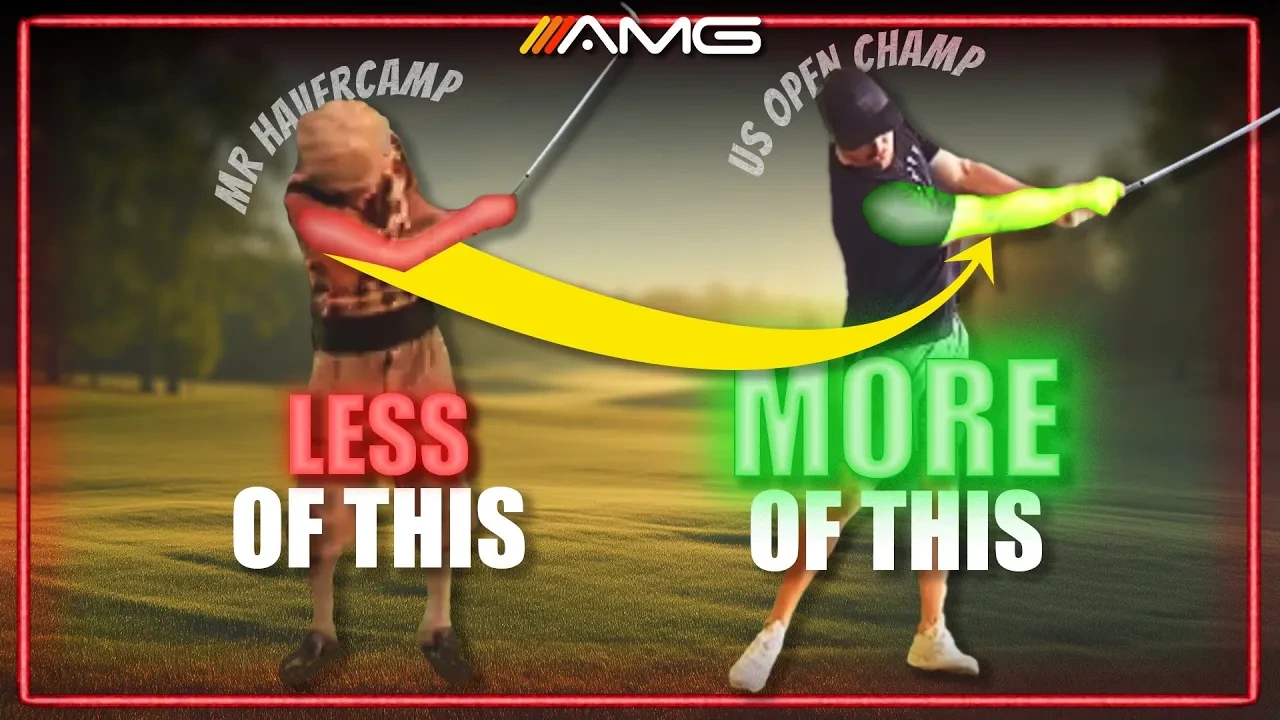
The problem is how many golfers try to get there. They pause the video, see the arms extended, and try to straighten the arms through impact. In the AMG video below, Shaun Webb and Mike Granato explain why that does not work. The arms-out look is not primarily an arm move. It is the result of the body getting into the right impact position and then extending and rotating through the ball.
If your arms fold quickly, your chest stays down, or you fight a post-impact chicken wing pattern, this is the piece to study.
Quick Answer
Golf extension through impact happens when the pelvis moves forward and opens, the body starts extending upward, and the chest rotates so the arms can stay in front of the body. Trying to manually straighten the arms usually misses the cause.
- Start from a real impact position with the hips forward and open.
- Let the trail hip and knee move toward the ball and around, not stay locked back.
- Allow the pelvis and chest to extend upward through the strike.
- Keep the arms relatively quiet while the body creates the reach.
- Use a push ball drill to feel body-driven extension.
Watch the Video
Shaun Webb and Mike Granato show the extension pattern, compare pro and amateur GEARS examples, and demonstrate the push ball drill in the AMG video below.
Watch the original video on YouTube: https://www.youtube.com/watch?v=VJLesMyf53Y

The Mistake: Chasing the Arms-Out Look
The easiest mistake is to see extension and try to copy the arm shape.
That is backwards. If the body is folded over, the pelvis is in the wrong orientation, or the chest is not rotating and extending, the arms do not have a clean path to extend. You can try to shove them away from you, but that usually creates another compensation.
AMG makes the point clearly in the video: the look comes from the movements that happened before it. Impact position, pelvis motion, torso extension, and rotation all create the space for the arms to stay organized after the ball.
Start With a Real Impact Position
Before you train extension, check whether your concept of impact is accurate.
In the video, Shaun demonstrates a simple impact setup: the hips have shifted forward, the pelvis has opened, the trail leg has moved in toward the ball, and the upper body still has enough tilt to deliver the club. The handle is forward, but the hands and club are still working on the trail side of the body.

That impact position matters because extension through impact is not a separate trick after the strike. It grows out of the position you deliver into the ball.
If you arrive folded over with the pelvis staying down and back, the arms are going to run out of room. If the pelvis can open and begin extending, the body gives the arms somewhere to go.
Why the Pelvis Has to Extend
Many golfers are afraid of the body moving upward because they have been told they lifted their head.
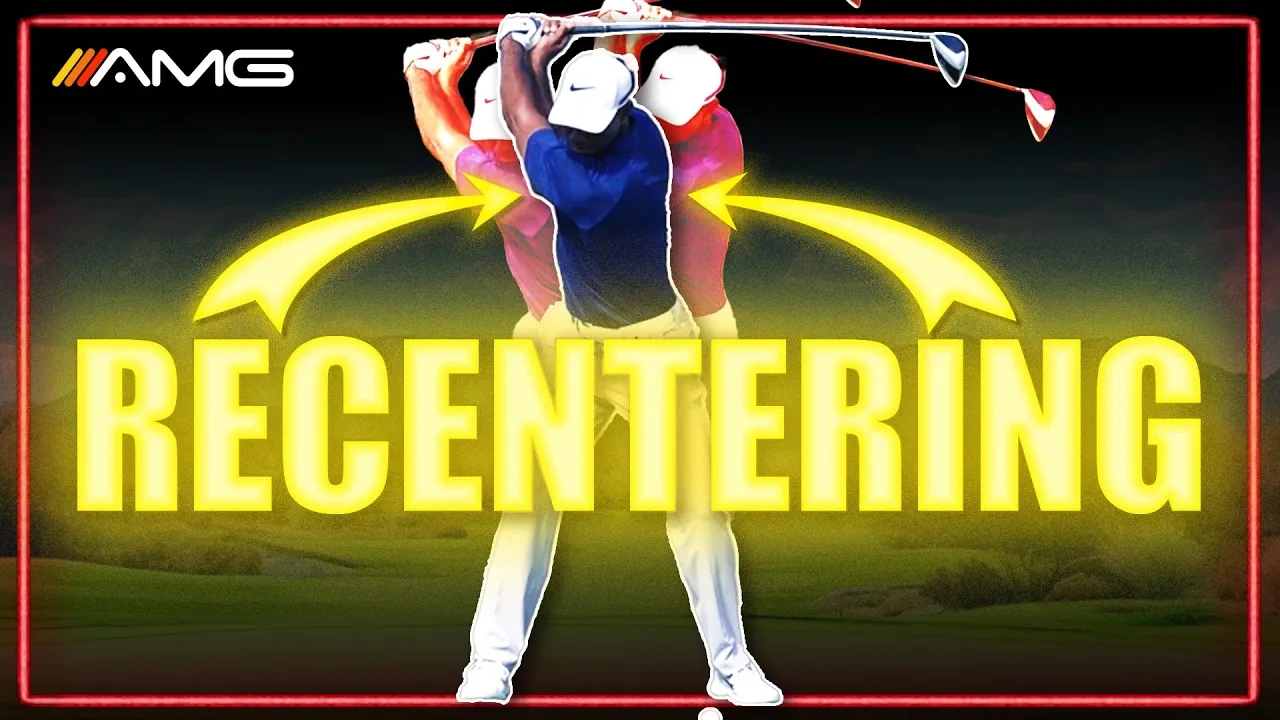
AMG is careful about this point. The problem is rarely that the body extends at all. The problem is usually when and how it extends. Through impact, the pelvis and chest need to work upward as the body rotates. Shaun describes the feeling as the body getting the club up out of the ground, rather than the arms lifting the club up while the body stays down.
That is a major difference.
If your body stays folded too long, the arms and hands can get close to you and then fold quickly. If the pelvis and chest extend and rotate, the arms can stay under the chest longer and then travel out in a more organized way.
What the GEARS Comparison Shows
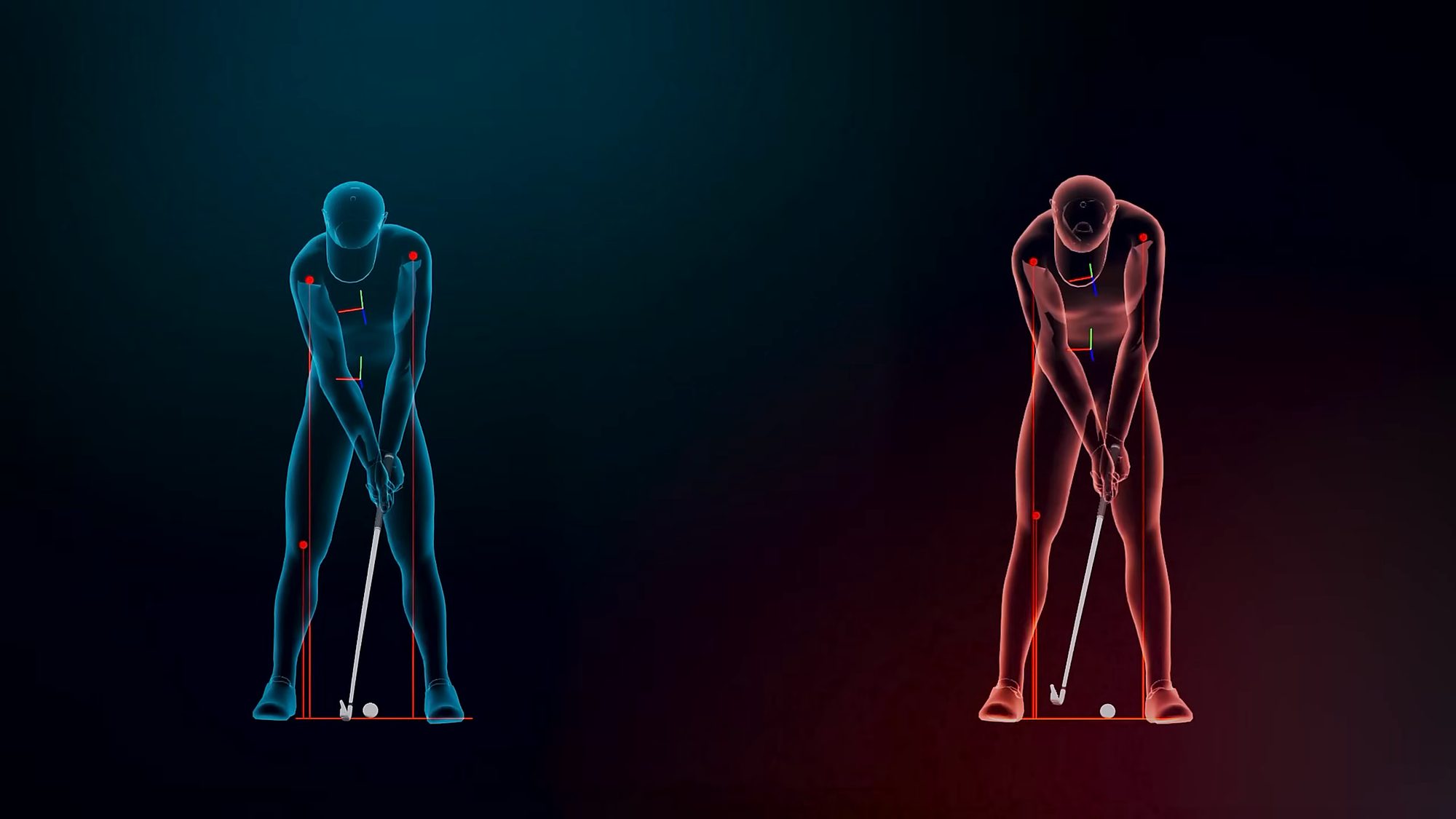
The GEARS examples in the video make the difference easy to see.
In the pro pattern, the pelvis starts down, works toward level, then extends upward after impact. The chest also works upward and around. When the shaft and trail arm reach the post-impact checkpoints, the arms are still being carried by the body rather than thrown independently.
In the amateur examples, AMG shows a more folded pattern. The pelvis points down too long, the hands climb above the pelvis and chest lines early, and the body loses the stretch from the trail thigh through the torso. That creates the look many golfers do not want: arms trying to fake extension while the body is still collapsed.
This is why the solution is not simply "straighten your arms." The body has to organize the motion first.
The Push Ball Drill
The push ball drill gives you a simple way to feel the correct source of the motion.
Start in a good impact position with the club touching the ball. Instead of making a normal swing, try to push the ball forward using your body turn and extension. The arms should not take over. Your goal is to feel the pelvis and torso rotate and extend while the arms keep roughly the same relationship to the body.

Use this progression:
- Set up at impact, not address.
- Put the club against the ball.
- Push the ball forward with body rotation and extension.
- Stop and check whether the arms stayed quiet.
- Return to impact and repeat slowly.
- Add a small shot only when the body is creating the motion.
This can also help your short game because the same idea applies around the green: club down, body up. The body creates the motion that lets the club exit instead of stabbing at the ball with the arms.
What to Watch For on Video
When you film your swing, look for these checkpoints:
- Do the hips move forward and open by impact?
- Does the trail hip and knee move toward the ball and around?
- Does the pelvis start extending upward after impact?
- Does the chest rotate and point more upward through the strike?
- Do the arms stay under the chest longer instead of lifting away by themselves?
- Does the post-impact look come from the body or from a late arm reach?
You do not need the swing to look identical to a tour player. But the core movement should make sense. If the body stays folded and the arms are trying to rescue the exit, the extension problem is probably not an arm problem.
Common Fixes That Miss the Point
Punch shots can help some golfers learn control, but they can also reinforce the wrong idea if you use them to freeze the body down and drag the handle forever.
The goal is not to hold the body in forward bend. The goal is to deliver the club, let the pelvis and chest extend, and keep the arms supported by the rotation. If you try to fix the look by forcing the arms straight, you may make the release more awkward and the body less useful.
The better fix is bigger and simpler: improve the impact position, then train the body to extend and rotate through the strike.
FAQ
Use these answers as a quick guide before practicing extension through impact.
How do you get extension through impact in golf?
Start with a better impact position, then let the pelvis and chest extend upward as the body rotates. The arms extend because the body creates space, not because you force them straight.
Should I try to straighten my arms after impact?
Not as the main fix. AMG explains that manually straightening the arms usually chases the appearance instead of the cause. Train the body motion that lets the arms stay organized.
Does body extension mean I am standing up?
Not automatically. Through impact, the body should be moving upward and around in sequence. The issue is not extension itself. The issue is extending at the wrong time or losing posture before delivery.
What causes a chicken wing after impact?
One common cause is the body staying folded too long while the arms run out of room. The arms then fold or lift to fake the exit. AMG's solution is to improve impact, pelvis motion, and body-driven extension.
What is the push ball drill for golf extension?
Set up at impact with the club against the ball, then push the ball forward using body rotation and extension. The drill teaches you to move the club with the body instead of reaching with the arms.
The Bigger Lesson
Good extension is not a pose. It is a result.
If you want the arms to look extended after impact, train the pieces that create that look: a better impact position, pelvis and chest extension, rotation, and arms that stay connected to the body motion. Once those pieces improve, the follow-through starts to clean itself up without forcing the arms into a shape they cannot hold.