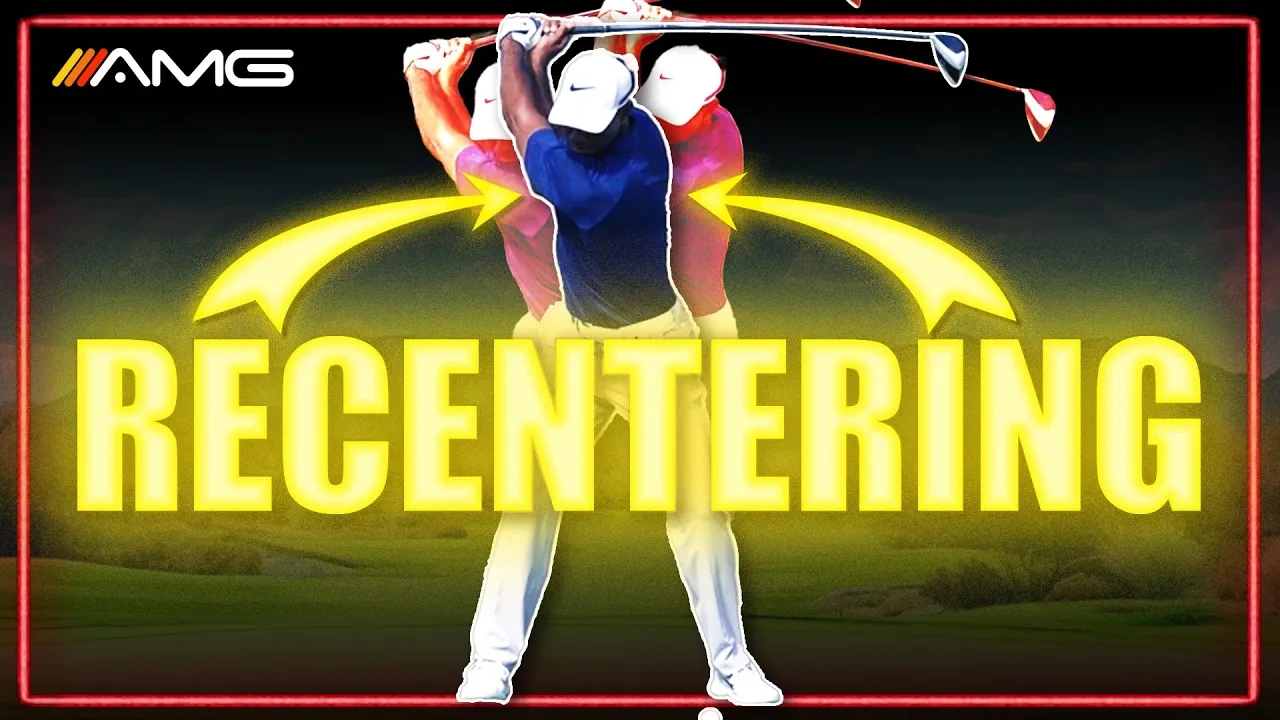
How to Recenter in Golf Swing Like the Pros


How to Recenter in Golf Swing Like the Pros
Most golfers who struggle with recentering are not missing the idea. They are missing the size and timing of the motion.
In the AMG video below, Mike Granato and Shaun Webb explain that recentering is not a big lunge toward the target and it is not your upper body tipping left at the top. The useful version is smaller: load a little into the trail side, let the club continue to the top, then settle the pelvis back toward the middle before the downswing unwinds.
That timing is why the best players can look smooth while still creating pressure, rotation, and room to move through the ball.
Quick Answer
To recenter in the golf swing, shift a small amount into your trail side early in the backswing, stay there long enough to finish the turn, then let the pelvis settle back between your feet as the club completes the backswing. The move should feel more like a lower-body settle than an upper-body tip.
- Load into the trail side first instead of starting left.
- Do not bounce off the trail side immediately.
- Recenter with the pelvis and pressure, not by tipping the chest toward the target.
- Use video feedback or a simple feel drill because the move is subtle.
- Think "shift, turn, shift, turn" rather than "slide hard left."
Watch the Video
Shaun Webb and Mike Granato walk through the recentering pattern, common mistakes, pro examples, and practice feels in the AMG video below.
Watch the original video on YouTube: https://www.youtube.com/watch?v=A1erDgcl8xY

What Recenter Actually Means
Recenter starts after you have moved a little into your trail side.
That matters because a lot of players hear "get left early" and skip the first piece. They either start moving toward the lead side immediately, or they load into the trail side and bounce off it too fast. Both versions can throw off the sequence before the club has time to finish the backswing.
In the video, AMG describes the useful amount as small, often around the width of a golf ball with an iron. The point is not to sway. The point is to give the swing a small athletic load, then let the body settle back toward the center as the club finishes traveling up.
If you make the move with your upper body, you may get your mass back toward the middle, but you also tend to steepen the downswing and put your body in a worse position to rotate. The better goal is a lower-body recenter: the pelvis moves back toward the middle while the back line stays slightly angled away from the target.
The Two Recenter Mistakes AMG Sees Most
The first mistake is tipping the upper body toward the target.
That can feel like recentering because your body mass is moving left, but it is usually the wrong part of the body doing the job. When the chest tips toward the target, the club often gets steeper and the downswing loses the flow you were trying to create.
The second mistake is bouncing off the trail side too quickly.
You make a backswing shift, but instead of staying on that trail side for a moment, you immediately push back toward the target. AMG compares that to using the trail side like a wall. You hit it, bounce off it, and the sequence gets rushed.
The feel is quieter than that. Load, keep turning, then settle back.
How Pros Make the Move Look So Smooth
In the pro examples in the video, the motion is much more subtle than many amateurs expect.
AMG shows players with different swing lengths and clubs, including Robert Rock, Chris Kirk, Adam Scott, Sepp Straka, Jon Rahm, Tiger Woods, and Brooks Koepka. The details vary, but the pattern is consistent: the player moves a little into the trail side, then returns toward the middle before the downswing shift forward happens.

The important checkpoint is that the back line stays angled slightly away from the target. These players are not heaving the upper body toward the target to recenter. They are shifting the pelvis and pressure enough to get the body organized before unwinding.
Longer clubs can show a larger shift. Shorter swings usually show less. That is why copying the amount from one player or one club can lead you into an overdone move. The pattern matters more than the size.
The Feel: Shift, Turn, Shift, Turn
A simple way to rehearse the pattern is to remove the club at first.
Cross your arms, close your eyes, and feel your pressure at address. Then make a small turn into the trail side. You should feel a little more pressure in the trail foot. As you complete the backswing turn, let your body settle back toward the middle. From there, you are ready to unwind.

That is the feel behind "shift, turn, shift, turn":
- Shift a small amount into the trail side.
- Turn enough to complete the backswing.
- Shift back toward center with the lower body.
- Turn through the ball.
Do it slowly before you add speed. Recenter is not a violent move, and it should get more subtle as you swing faster.
A Simple Recenter Drill
Use this sequence before hitting full shots:
- Film yourself face-on.
- Draw a line just outside each leg.
- Make a slow backswing and watch for a small trail-side load.
- Let the club finish going up as the pelvis returns between the lines.
- Check that your upper body did not tip toward the target.
- Add a ball only when the slow rehearsal looks organized.
If you need more feedback, set a chair near each hip and rehearse the backswing slowly. Feel the trail hip move lightly toward the trail-side chair, then return toward center as the club finishes. Do not crash into either side.
This gives you feedback without making the move bigger than it needs to be.
Why This Helps Your Downswing
Good recentering gives the downswing a better starting point.
When you are still hanging on the trail side at the top, you may have to rush forward. When you tip left with the upper body, you may get steep. When you bounce too hard off the trail side, you may lose the sequence that lets the club and body flow together.
The goal is a middle ground: enough trail-side load to create momentum, enough return toward center to stay balanced, and enough patience to let the downswing unwind instead of panic.
FAQ
Use these quick answers before you start training the move.
What does recenter mean in the golf swing?
Recenter means returning your pressure and pelvis back toward the middle after a small trail-side backswing load. It happens before the downswing fully unwinds, not as a big last-second slide.
Should I recenter with my upper body?
No. AMG warns against tipping the upper body toward the target to recenter. The better pattern is a lower-body settle that lets the back line stay slightly angled away from the target.
How much should I shift into my trail side?
With an iron, AMG describes the move as small, often around the width of a golf ball. The exact amount can change with club length and swing length, but it should not look like a big sway.
Why do I get steep when I try to recenter?
A common reason is using the chest and head to move toward the target. That can put the body in a tipped-forward position and make the downswing steeper. Rehearse the pelvis and pressure shift instead.
What is a good drill for recentering?
Start without a club. Cross your arms, close your eyes, feel a small shift into the trail side, then let your body settle back to center as you finish the backswing. Add the club only after you can feel the pattern.
The Bigger Lesson
Recenter is valuable because it gives your downswing a head start without forcing you to rush.
If you can feel a small trail-side load, stay patient long enough to finish the turn, and return toward center with the lower body, the swing starts to look less forced. You are no longer trying to manufacture rotation from a bad position. You are setting up the rotation before the downswing begins.
That is the move worth practicing.